
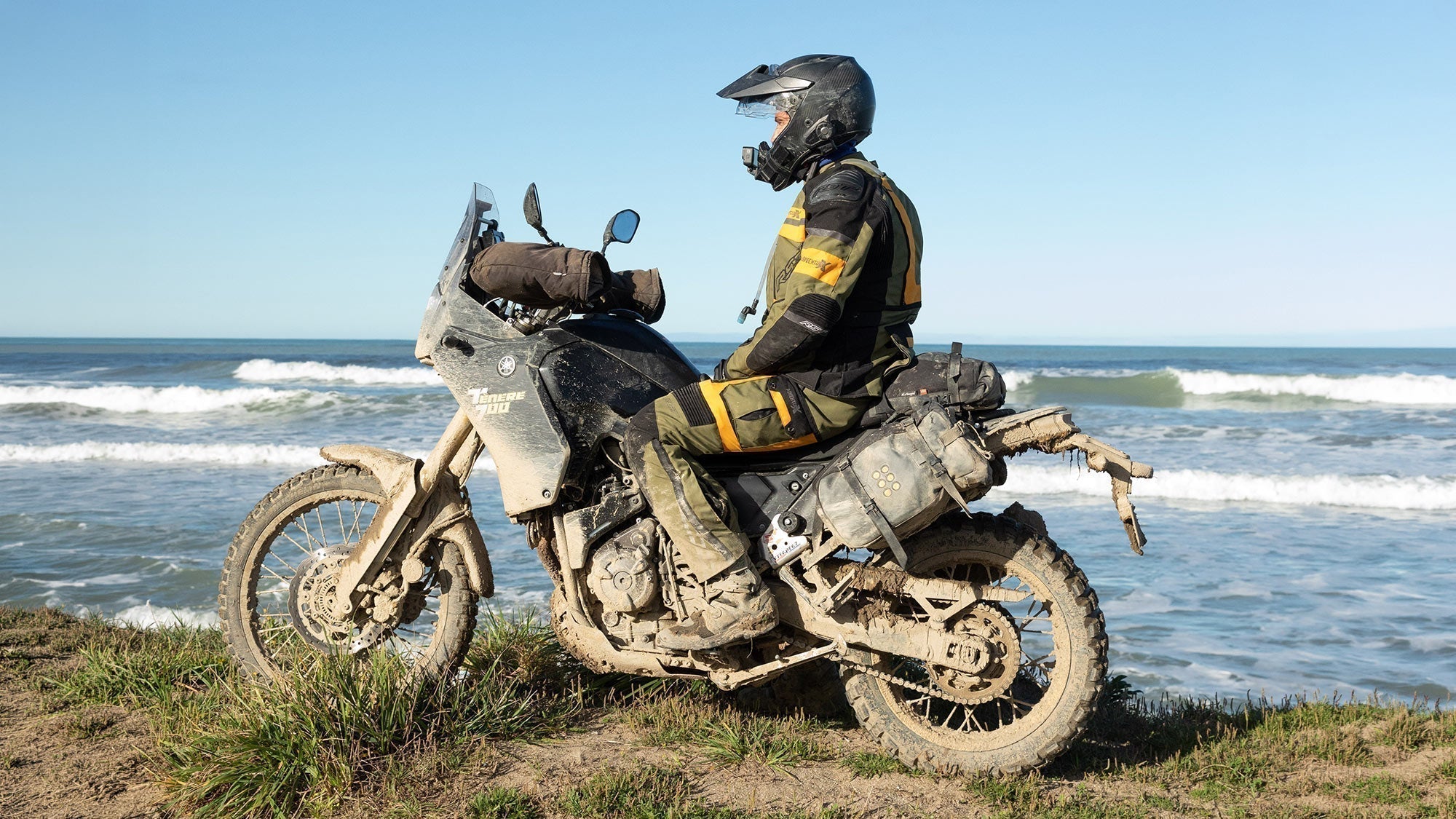
If your riding mixes tar seal with gravel, buy an adventure helmet. You get a peak for sun strike and roost, a proper sealing visor for the motorway, and ventilation that still works at trail speeds. A motocross helmet only makes sense when nearly all your riding is dirt: you wear goggles, there is no visor, and it gets loud and cold on the open road. And if gravel never features in your plans, a road full-face is quieter, more aerodynamic and better value. Here is how the three types actually differ, what each is like to live with in New Zealand conditions, and what you get as the price climbs, from $249.90 to premium carbon.
In this article
- What is the difference between the three types?
- What is an adventure helmet, and who should buy one?
- When is a motocross helmet the right choice?
- When does a road full-face make more sense?
- Which helmet suits New Zealand riding?
- How much do you need to spend?
- FAQ
What is the difference between adventure, motocross and road helmets?
Every difference between the three types traces back to one question: how much of your riding happens off the seal? Off-road riding is slower, hotter work, so dirt-focused helmets prioritise airflow, low weight and a big eye port for goggles. Road riding is faster and colder, so road helmets prioritise sealing, quiet and aerodynamics. Adventure helmets sit deliberately between the two.
| Adventure (ADV) | Motocross (MX) | Road full-face | |
|---|---|---|---|
| Peak | Yes, usually adjustable or removable | Yes, large and fixed | No |
| Visor | Yes, seals like a road helmet | No, goggles only | Yes |
| Goggle compatible | Yes | Yes, designed for them | No |
| Ventilation | High | Maximum | Moderate |
| Noise at 100 km/h | Moderate | Loud | Quietest |
| Sun protection | Peak, often a drop-down internal visor | Peak only | Often a drop-down internal visor |
| Best for | Mixed tar and gravel, touring, commuting | Dirt, trails, the MX track | Sealed roads only |
What is an adventure helmet, and who should buy one?
An adventure helmet combines a motocross-style peak, a road-style sealing visor and enough ventilation for slow technical riding. Most also take goggles with the visor up or removed, and many add an internal drop-down sun visor, which earns its keep against low winter sun.
That combination suits more Kiwi riders than any other type. If you commute during the week and chase gravel on the weekend, tour with the occasional unsealed detour, or simply want one helmet that handles everything short of a motocross track, this is the type to buy.

Carbon-aramid shell, Pinlock-ready panoramic visor, adjustable peak, goggle compatible.
Want a closer look at the AX9? MX2 World Champion Ben Townley walks through it here:
When is a motocross helmet the right choice?
Buy a motocross helmet when your riding is dirt first and road second, or road never. Trail days, farm work, motocross and enduro all reward what an MX helmet does best: the lightest weight, the most airflow and the widest field of vision for goggles.
The trade-off is everything a visor normally does. With goggles instead of a sealed visor, motorway speeds mean wind noise, cold air and fatigue on longer transport sections. A standards-approved MX helmet is legal on NZ roads, but riding one there daily is a compromise you will feel.
When does a road full-face make more sense?
If your bike never leaves the seal, skip the peak entirely. A road full-face is quieter, lighter on your neck at motorway speed (no peak catching the wind), and generally cheaper than an adventure helmet of the same quality. Sport riders, tourers who stay on tar and commuters are all better served by a dedicated road helmet.
Which helmet suits New Zealand riding?
- You commute, plus gravel roads call to you: adventure helmet. The visor handles the week, the peak and goggle option handle the weekend.
- You ride trails, farms or the MX track, trailering the bike there: motocross helmet. Nothing else ventilates or fits goggles as well.
- You tour long distances with the odd unsealed detour: adventure helmet, ideally with a drop-down sun visor for those low late-afternoon South Island sun angles.
- You ride tar seal only: road full-face. Save the peak, buy quietness.
One NZ-specific tip regardless of type: fit a Pinlock anti-fog insert if the visor takes one. Riding through four seasons in one afternoon is a Kiwi speciality, and a fogged visor on a cold gravel climb is miserable.
How much do you need to spend?
Safety certification is the floor, and it is set by regulation, not price. The Nitro MX780 below is certified to ECE 22.06, the current UN standard with tougher impact and rotational testing, at $249.90. Spending more buys you lighter shell materials (fibreglass, carbon-aramid), quieter linings, better visor mechanics, more adjustability and longer comfort on big days, which is exactly where the AGV AX9 earns its price.

ECE 22.06 certified with an internal drop-down sun visor. Serious spec for the money.
Frequently asked questions
Can you legally wear a motocross helmet on NZ roads?
Yes, as long as it meets an approved standard (ECE 22.05 or 22.06, AS/NZS 1698, Snell and several others qualify). You will want goggles, since there is no visor, and earplugs are a good idea at open-road speeds.
Are adventure helmets noisy on the motorway?
They sit between road and MX helmets. The peak adds some wind noise compared with a road full-face, though on many adventure helmets (including the AGV AX9) the peak is removable, which converts it into something much closer to a road helmet for touring stretches.
Can you wear goggles with an adventure helmet?
Yes. Most adventure helmets, including both featured here, accept goggles with the visor raised or removed. Riders switch to goggles for dusty or slow technical riding where extra airflow matters.
What is a drop-down sun visor (DVS)?
A tinted internal visor that slides down behind the main visor at the flick of a lever. It replaces swapping to a dark visor or wearing sunglasses, and it is one of the most-used features on any helmet that has it.
What is ECE 22.06, and does it matter?
It is the current European helmet standard, adopted widely including in NZ, and it added tougher testing than the old 22.05, including rotational impacts and testing at more points on the shell. A 22.06 helmet at $249.90 has passed the same tests as one at $2,000.
Helmet sorted? It is one piece of five. Our complete NZ adventure gear guide covers the jacket, pants, gloves and boots to go with it, including what a full kit costs.
Helmet sorted? Tyres are the other piece of kit that decides how a ride goes: our guide to choosing motorcycle tyres matches the right rubber to commuting, adventure, supersport and dirt riding.
Not sure? Come and try one on.
Helmet fit is personal, and the right size matters more than any spec sheet. Visit us in Takapuna seven days a week and talk to staff who actually ride, or browse the full range online.
Shop all helmets →The CT Price Promise · 100% authentic NZ-supplied brands