
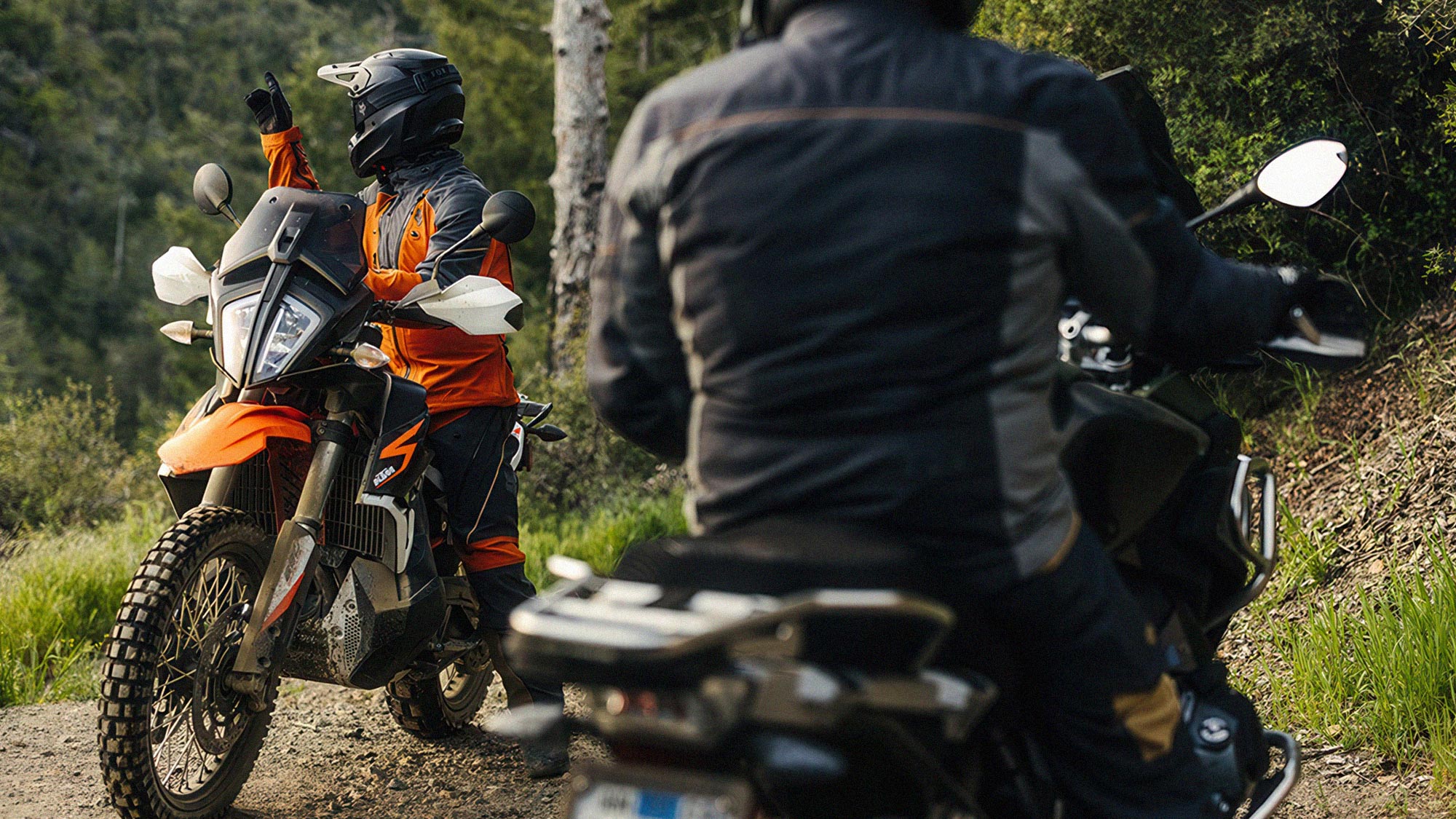
A complete adventure riding kit is five pieces: a helmet with a peak and a proper visor, a CE-rated textile jacket, riding pants with armour at the hips and knees, gloves suited to the season, and waterproof boots with genuine ankle support. Buy right and one kit handles commuting, gravel weekends and a South Island tour. In New Zealand, proven gear across all five slots comes to about $1,700, and a premium setup lands just over $3,100. This guide works through each piece from the top down: what it needs to do, what you get as the price climbs, and an in-stock pick for every slot.
In this article
- How should you think about adventure gear?
- What helmet do you need for adventure riding?
- What makes a good adventure jacket?
- Do you need dedicated adventure pants?
- Which gloves work for adventure riding?
- Why do boots matter more off-road?
- What does a full adventure kit cost in NZ?
- FAQ
How should you think about adventure gear?
Adventure gear has three jobs, in this order: protect you when things go wrong, keep the weather out, and stay comfortable through a long day of mixed riding. Every piece in this guide earns its place against those three.
Protection you can read off the label. Riding garments are certified under EN 17092 and rated A, AA or AAA for abrasion resistance and seam strength; AA is the standard worth holding out for in adventure gear. The armour inside is rated separately under EN 1621: Level 1 passes the test, Level 2 roughly halves the force that reaches your body. Good gear tells you both numbers without you having to ask.
Weather is where New Zealand does its worst. Waterproofing comes in two forms: a drop-liner, where a waterproof membrane hangs loose inside the outer shell, or a laminate, where the membrane is bonded to the shell itself. Drop-liner gear costs less and keeps you dry, but the outer fabric still soaks up water, so it gets heavier in rain and takes longer to dry. Laminate (Gore-Tex and similar) stays light in sustained rain and dries fast, and you pay for the privilege.
Comfort is mostly ventilation and layering. Winter is solved by thermal liners and a merino base layer; summer is solved by vents you can open at the roadside without undressing. A jacket that does both is the one you keep for ten years.

What helmet do you need for adventure riding?
For riding that mixes seal and gravel, an adventure helmet: a peak for sun strike and roost, a visor that seals properly at motorway speed, and goggle compatibility for slow dusty work. We covered this decision in depth, including when a motocross helmet or a road full-face is the smarter buy, in our guide: Adventure vs Motocross vs Road Helmets: Which Do You Actually Need?
The quick picks from that guide still stand. The Nitro MX780 Adventure DVS ($249.90) is certified to ECE 22.06 with an internal drop-down sun visor, and the AGV AX9 is the premium option: carbon-aramid shell, panoramic Pinlock-ready visor, removable peak. Whichever way you go, budget for a Pinlock insert; a fogged visor on a cold gravel climb ruins a ride faster than rain does.
What makes a good adventure jacket?
A proper adventure jacket is textile, cut long enough to overlap the pants, with CE armour in the shoulders and elbows, a pocket for a back protector, vents you can work with gloves on, and a removable thermal liner so one jacket covers February and July. Fit it snug enough that the armour cannot wander in a slide, with room for a mid-layer underneath.

MaxTex shell with a fixed SinAqua waterproof lining, removable 300g thermal liner, Level 1 shoulder and elbow armour, four front vents.
A note on the Fox Gore-Tex adventure range (Ranger, Recon and Defend): it is genuine Gore-Tex kit and worth a look while sizes last, but the range is being run out in NZ, and sizes will not be replenished once they go. That is exactly why the picks in this guide are lines we can restock.
Do you need dedicated adventure pants?
Yes. Hips and knees usually touch down first in a spill, and jeans, riding jeans included, are a road compromise rather than adventure gear. What you want mirrors the jacket: an AA rating, hip and knee armour, waterproofing, and adjustment at the knee so the armour actually sits over your kneecap in the riding position, not halfway up your shin.

AA rated with Level 2 hip and Level 1 knee armour, SinAqua waterproof membrane and a removable thermal liner. Made to pair with the Paragon 7 jacket.
Which gloves work for adventure riding?
Plan on owning two pairs eventually. A leather or vented glove covers most of the year, because feel at the levers matters more than anything once the surface goes loose. A waterproof winter pair covers the months when it is simply cold. Short-cuff gloves suit adventure riding better than road gauntlets: they clear jacket sleeves and pass some air through.

Soft-touch leather with an Amara-reinforced double-layer palm and TPU knuckle protection. The all-year NZ choice.
For winter, add the RST Pro Series Ranger waterproof glove ($219.00). Starting on a tighter budget, the Dririder RX Adventure ($79.90) covers the basics honestly.
Why do boots matter more off-road?
Feet and ankles do the hard labour off the seal: paddling through ruts, rocks flicked up by the front wheel, and the slow tip-over that puts the bike on your ankle. A road boot is not built for any of that. An adventure boot adds torsional stiffness against twists, moulded shin and ankle protection, a sole that grips wet rock as well as footpegs, and a waterproof lining for crossings and all-day rain.

Full-leather with a Drytex waterproof lining, TPU-moulded protection and a dual-density adventure sole. The boot NZ adventure riders default to.
If $549 is a stretch, the O'Neal Sierra WP ($369.00, every size in stock) covers the same jobs for less. At the premium end, the Leatt 7.5 ADV HydraDri ($749.99) steps up the waterproofing and protection again.
What does a full adventure kit cost in NZ?
Here is the honest arithmetic, using gear from this guide at today's prices.
| Get sorted | Step up | |
|---|---|---|
| Helmet | Nitro MX780 Adventure DVS, $249.90 | AGV AX9 Trail, $474.50 (50% off) |
| Jacket | RST Paragon 7, $549.00 | Leatt 7.5 ADV DriTour, $1,249.99 |
| Pants | RST Paragon 7, $409.00 | Leatt 7.5 ADV DriTour, $649.00 |
| Gloves | RST Adventure-X, $149.00 | RST Ranger WP, $219.00 |
| Boots | O'Neal Sierra WP, $369.00 | Forma Adventure, $549.00 |
| Total | $1,725.90 | $3,141.49 |
Prices as at July 2026; the AX9 price is clearance stock, so treat it as a bonus rather than a plan. Mix the columns freely: the smartest kits usually pair step-up gear where you feel it most, boots and helmet on long days, with get-sorted picks elsewhere. Spreading the spend? Buy in this order: helmet, boots, jacket and pants, gloves.
Frequently asked questions
Can you use motocross gear for adventure riding?
Some of it. The helmet can cross over (worn with goggles) if your riding is dirt-heavy; our helmet guide covers exactly when. MX jerseys, pants and boots are built for airflow and impact at trail speeds, not abrasion at 100 km/h, and none of it keeps rain out. If the ride includes open road, the rest of the kit should be adventure-specific.
What do the CE ratings on riding gear mean?
Two separate systems. EN 17092 rates the whole garment (A, AA or AAA) for abrasion resistance and seam strength; AA is the adventure-gear benchmark. EN 1621 rates the armour inside as Level 1 or the more protective Level 2. Independent test results for hundreds of garments are published free at MotoCAP, worth a browse before any big purchase.
Is Gore-Tex worth the extra money?
For high-mileage, all-weather riders, yes. The membrane is bonded to the outer shell, so the fabric never soaks up water; the jacket stays light through a day of rain and dries overnight. If you mostly ride in fair weather and sit the storms out, a good drop-liner jacket like the Paragon 7 keeps you just as dry for far less money.
Do you need waterproof gloves in NZ?
From about May to September, yes. Cold, wet hands lose fine control at the levers long before you consciously notice, and a dedicated waterproof winter pair works better than liner tricks. The rest of the year a leather glove gives better feel.
What armour should you add first?
A back protector. Most jackets, the Paragon 7 included, arrive with shoulder and elbow armour fitted and an empty pocket at the spine. A CE Level 2 back insert usually costs well under $150 and is the single cheapest meaningful upgrade; add one the day you buy the jacket.
Gear is only half the setup: the right rubber matters just as much on gravel as a good jacket does in the rain. Our guide to choosing motorcycle tyres covers the adventure tyre options, from 90/10 road-biased to proper 50/50 rubber.
Build the whole kit in one stop.
Fit decides whether gear gets worn or left in the shed. Visit us in Takapuna seven days a week: try the jacket and pants together, size boots with your riding socks on, and talk it through with staff who ride these roads.
Shop adventure gear →The CT Price Promise · 100% authentic NZ-supplied brands